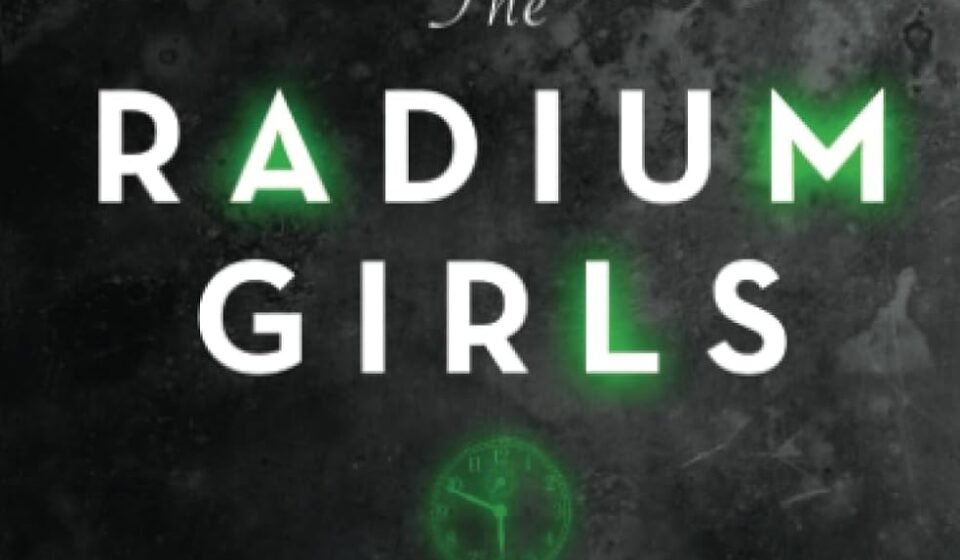
The Radium Girls: The Dark Story of America’s Shining Women (Harrowing Historical Nonfiction Bestseller About a Courageous Fight for Justice)


The Radium Girls: The Dark Story of America’s Shining Women — A Book Review
Some works of historical nonfiction earn their place on a shelf because they uncover something forgotten. Others endure because they turn that forgotten history into a story that refuses to let go. The Radium Girls: The Dark Story of America’s Shining Women belongs firmly in the second category. Subtitled as a harrowing historical nonfiction bestseller about a courageous fight for justice, the book examines a chapter of early twentieth-century American history that is equal parts scientific wonder, corporate negligence, and hard-won legal reform.
Described as a New York Times, USA Today, Wall Street Journal, and Amazon Charts bestseller, the book carries a reputation built across multiple bestseller lists. It also arrives with a striking endorsement from NPR Books, which observes that “the glowing ghosts of the radium girls haunt us still.” That line captures the tone of the subject matter well: this is a story whose consequences did not end with the women at its center.
What the Book Is About
The narrative opens against the backdrop of the First World War, a period the source material describes as otherwise dark years. Into that setting came radium, newly discovered by the Curies, and it quickly became a sensation. The element made gleaming headlines and was positioned as the fresh face of beauty and a wonder drug of the medical community. Its applications were remarkably broad for the era — the source notes that radium appeared in products ranging from body lotion to tonic water, marketed as a kind of miracle ingredient during a time when scientific enthusiasm often outpaced caution.
At the same time, hundreds of girls worked in radium-dial factories, toiling amidst glowing dust. The chemical covered their bodies from head to toe, and the book describes them as lighting up the night like industrious fireflies. These “shining girls” were considered among the luckiest alive because the job was so coveted. That perception is central to the tragedy the book documents: the very thing that made the work desirable was also what made it dangerous.
The Human Cost and the Fight for Justice
The turning point arrives when the women begin to fall mysteriously ill. What follows is a story of institutional denial. The factories that had once offered golden opportunities ignored claims of gruesome side effects and the women’s cries of corruption. As the fatal poison of radium took hold, the shining girls found themselves at the center of one of the biggest scandals of America’s early twentieth century.
What elevates the book beyond a straightforward account of suffering is its focus on what the women did next. Their battle became a groundbreaking fight for workers’ rights, one the source describes as echoing for centuries to come. The book also traces the wider legacy of their courage and tenacity: life-changing regulations, research into nuclear bombing, and, ultimately, the saving of hundreds of thousands of lives. That chain of consequences — from individual illness to national policy — is what gives the story its weight.
Writing Style and Approach
According to the source material, the book is written with a sparkling voice and breakneck pace. That combination matters for a subject this grim. Historical nonfiction can easily become dense or clinical, particularly when the underlying material involves medical suffering and legal proceedings. A narrative-driven approach, as described here, suggests the book is built to read more like a story than a textbook — following the women themselves rather than simply cataloguing events.
The phrase “fully illuminates” is used in the source to describe how the book treats the inspiring young women exposed to radium and their strength in the face of almost impossible circumstances. The emphasis on the individuals involved, rather than only the scandal or the science, appears to be the book’s defining characteristic.
Who Is This Book Best For?
Based on the subject matter and how the book is presented, several types of readers are likely to find it a strong fit:
- Readers of historical nonfiction — particularly those drawn to early twentieth-century American history and the period around the First World War.
- Anyone interested in workers’ rights and labor history — the book centers on a landmark fight for justice and the regulations that followed.
- Readers curious about the history of science and medicine — radium’s rise as a beauty ingredient and medical wonder drug is woven directly into the narrative.
- Those who prefer narrative-driven nonfiction — the source describes a sparkling voice and breakneck pace rather than an academic tone.
- Readers looking for stories of courage under difficult circumstances — the women’s tenacity is the emotional core of the book.
Readers who prefer strictly technical or clinical histories may find the narrative approach less to their taste, though that is a matter of preference rather than a shortcoming of the book itself.
What Makes It Stand Out
Plenty of history books document injustice. Fewer trace the full arc from a coveted factory job to sweeping regulatory change. The Radium Girls connects those dots. It begins with radium as a celebrated element — present in everyday products and hailed by the medical community — and follows it to the factory floor, where the consequences fell hardest on the young women handling it.
The book’s stated legacy is unusually far-reaching. The source links the women’s fight to life-changing regulations, research into nuclear bombing, and the saving of hundreds of thousands of lives. Whether or not a reader comes to the book with prior knowledge of the radium dial factories, that scope gives the story stakes well beyond its immediate setting.
It is also worth noting the breadth of recognition the book has received. Being named a bestseller by the New York Times, USA Today, the Wall Street Journal, and Amazon Charts suggests it has connected with a wide general readership, not just history specialists. The NPR Books quote reinforces that the story continues to resonate with contemporary audiences.
Final Verdict
The Radium Girls: The Dark Story of America’s Shining Women presents itself as a harrowing but ultimately inspiring work of historical nonfiction. It takes a subject rooted in illness, corporate denial, and scandal and frames it around the courage and tenacity of the women at its center. The book’s described strengths — a sparkling voice, a breakneck pace, and a full illumination of the people involved — suggest it is designed to inform without losing the human thread.
Its documented legacy, from workers’ rights battles to life-changing regulations and research with far-reaching implications, makes it more than a period piece. For readers who appreciate narrative history that follows real people through impossible circumstances, this book appears to be a compelling and substantial choice.
View on Amazon